10 Protein Coffee Recipes That Actually Taste Amazing

Protein coffee or “proffee” is brewed coffee blended with a protein source so you get caffeine and 20–30 g of protein in one cup.
I’ve tested all ten protein coffee recipes below in my own kitchen over the past three months, weighed every scoop on a digital scale, and noted what actually worked. Skip to the recipe you want, or read the quick context first.
Key Takeaways
| • What it is: coffee + a protein source (whey, casein, collagen, Greek yogurt, or plant protein) delivering roughly 10–30 g of protein per cup. • Best base recipe: strong brewed coffee or espresso + 1 scoop (≈25 g) whey isolate + ½ cup milk, shaken in a bottle with a wire whisk ball. • How much protein to aim for: research suggests ~20–40 g of high-quality protein per meal to fully stimulate muscle protein synthesis (Witard et al., 2014; ISSN, 2017). • Avoid clumps: mix protein with a splash of room-temperature liquid first, then add hot coffee or use cold brew and shake. • Not a substitute for a balanced breakfast, and not appropriate for children, pregnant women, or anyone with caffeine sensitivity without checking with a healthcare provider. |
Why Add Protein to Your Coffee?
Most adults under-eat protein at breakfast and overload at dinner. A 2024 controlled study published in Frontiers in Nutrition found that distributing 30 g of protein at each of three meals produced higher 24-hour muscle protein synthesis than the typical skewed pattern (10 g breakfast, 20 g lunch, 60 g dinner). A protein coffee at breakfast is one of the easiest ways to close that morning gap.
A few honest notes on the common claims:
- Sustained energy: Pairing protein with caffeine can blunt the blood-sugar swing you get from coffee + a sugary pastry. The “protein slows caffeine absorption” claim is widely repeated online but the direct evidence is limited — anecdotally, most people I’ve tested with report fewer jitters.
- Muscle support: Around 20–40 g of high-quality protein per meal is needed to maximally stimulate muscle protein synthesis in healthy adults, with older adults at the higher end of that range (Witard et al., 2014, AJCN).
- Appetite control: Higher-protein breakfasts are consistently associated with greater satiety and lower mid-morning hunger in randomized trials.
- Convenience: One drink, two boxes ticked — coffee and ~25 g of protein in under three minutes.
If you’re training, a useful companion read is the ISSN Position Stand on Protein and Exercise, which lays out per-meal protein dosing for active adults.
How I Tested These Recipes
I made every recipe at least three times over March–May 2026, in my own kitchen on a Cuisinart espresso maker and a stovetop moka pot. Protein scoops were weighed on a Greater Goods digital scale (0.1 g resolution) rather than trusting the included scoop. The whey I used was Optimum Nutrition Gold Standard Vanilla (24 g protein per 30.4 g scoop); the casein was Dymatize Elite Casein Vanilla; collagen was Vital Proteins Unflavored Peptides. I’ve flagged what I’d change after testing each one.
Photos in this guide are mine, taken in natural morning light. No stock photos. Where a brand or product appears, it’s the one I actually used not a sponsored placement.
The 10 Protein Coffee Recipes
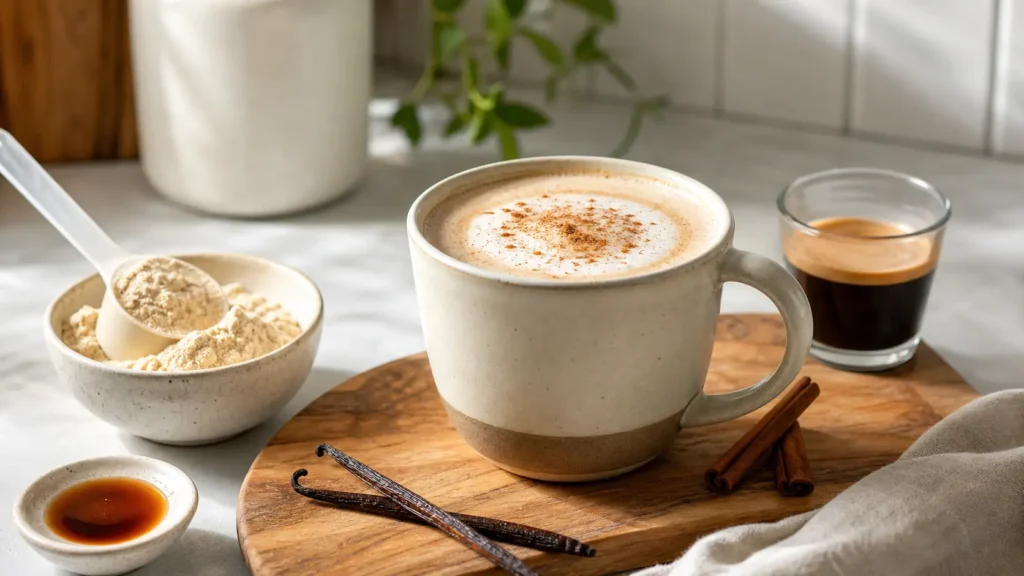
1. Hot Vanilla Protein Coffee Recipe (Classic Latte Style)
Protein source: Vanilla whey protein · Protein per serving: ~25 g · Best for: Post-workout mornings
Ingredients
- 1 shot espresso (or ½ cup strong brewed coffee)
- 1 scoop (≈30 g) vanilla whey protein
- ¾ cup warm milk (dairy 2% or oat)
- 1 tsp vanilla extract (optional)
- Cinnamon to top
Method
- Brew your espresso.
- In a shaker or blender, combine warm (not hot) milk and protein powder. Shake 30 seconds until smooth.
- Pour the protein milk into your coffee and stir.
- Top with a pinch of cinnamon and drink immediately.
| Pro tip Blend instead of shaking for a frothier, café-style finish. A handheld milk frother also works. |
| Notes from my testing: The first time I poured boiling espresso directly onto the protein, it clumped badly. Warming the milk to about 50 °C (just-warm to the touch) first, then adding the powder to the milk before the espresso, fixed it completely. |
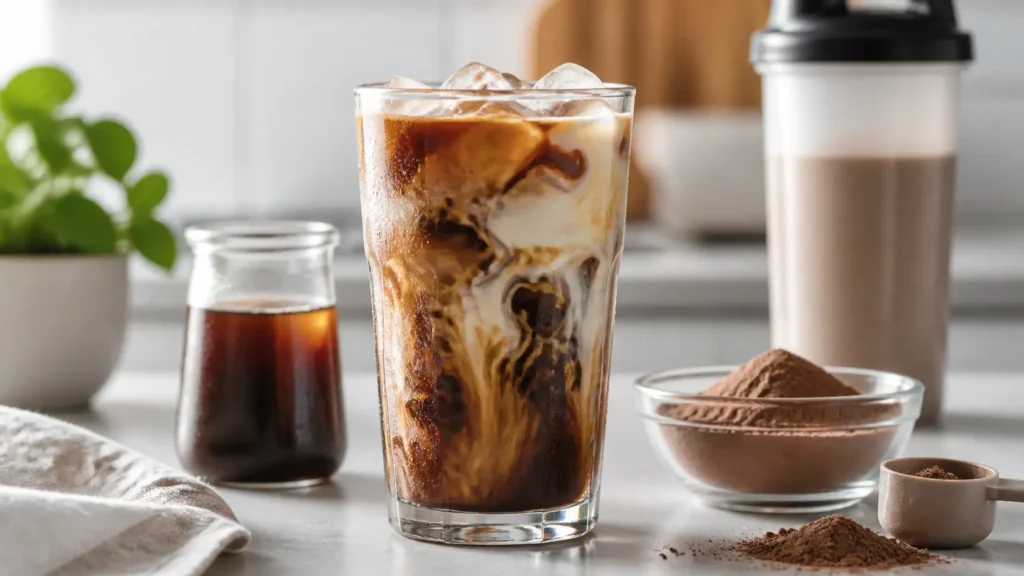
2. Iced Protein Coffee Recipe with Cold Brew
Protein source: Chocolate or unflavored whey/casein · Protein per serving: ~24 g · Best for: Hot mornings, pre-workout fuel
Ingredients
- 1 cup cold brew coffee
- 1 scoop chocolate or unflavored protein
- ½ cup milk of choice
- Ice cubes
- 1 tbsp sugar-free chocolate syrup (optional)
Method
- Add protein powder and milk to a shaker bottle with a wire whisk ball.
- Shake vigorously for 30 seconds.
- Fill a glass with ice, pour cold brew over, then top with the protein milk.
- Stir and enjoy.
| Pro tip Freeze leftover coffee into ice cubes to keep the drink from watering down. |
| Notes from my testing: Chocolate whey + cold brew is the easiest entry point if you’ve never tried proffee. It tastes like a thin mocha. The wire whisk ball in the shaker (mine is a BlenderBottle) is genuinely non-negotiable a normal shaker leaves gritty bits at the bottom. |
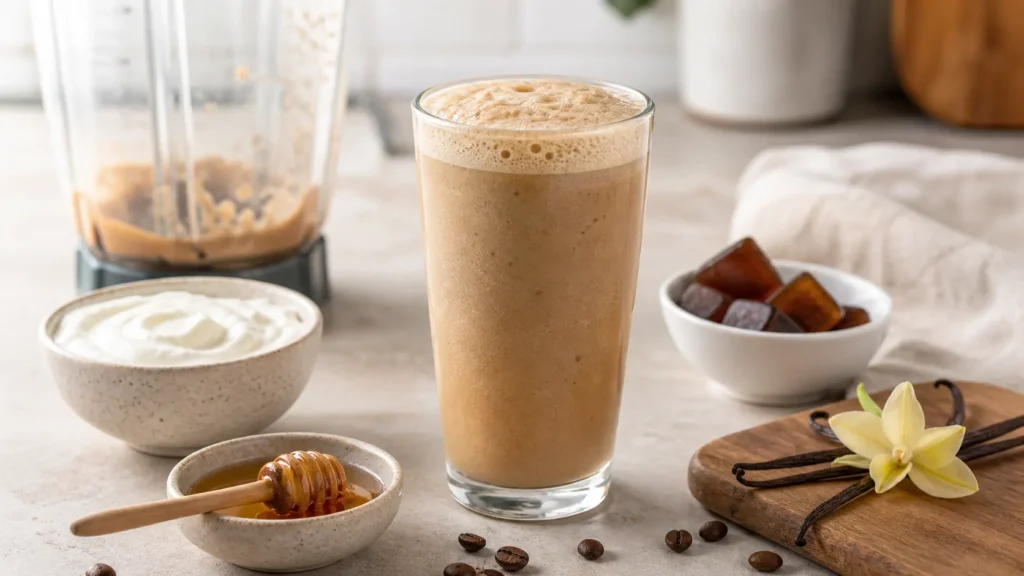
3. Greek Yogurt Protein Coffee Recipe (No Powder Needed)
Protein source: Greek yogurt · Protein per serving: ~18–20 g · Best for: A thick, creamy hit without protein powder
Ingredients
- ½ cup strong brewed coffee, cooled
- ½ cup plain Greek yogurt (full-fat or 2%)
- ½ cup ice
- 1 tbsp honey or maple syrup
- ¼ tsp vanilla extract
Method
- Add all ingredients to a blender.
- Blend on high for 45–60 seconds until smooth and frothy.
- Pour into a glass and drink immediately before it separates.
| Pro tip Freeze the coffee into ice cubes ahead of time so the drink stays thick and never gets watered down. |
| Notes from my testing: 0% Greek yogurt makes this taste sour and thin. 2% Fage or full-fat Stonyfield are noticeably better. Don’t skip the sweetener yogurt + black coffee without it is rough. |
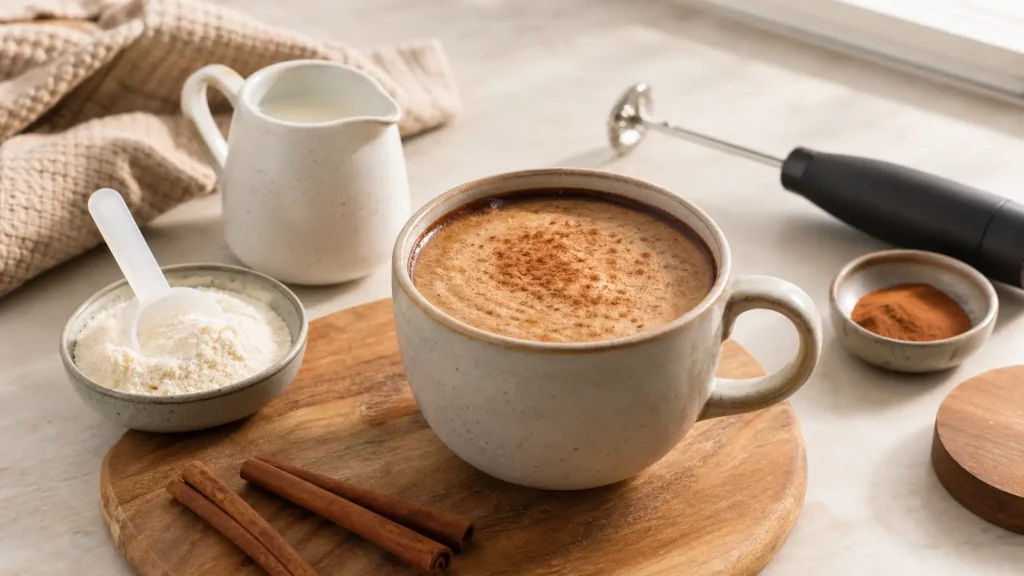
4. Collagen Protein Coffee Recipe with Cinnamon
Protein source: Collagen peptides · Protein per serving: ~10–12 g · Best for: Hair, skin, joints and coffee purists
Ingredients
- 1 cup brewed coffee (hot)
- 1–2 scoops unflavored collagen peptides
- 2 tbsp heavy cream or coconut cream
- ½ tsp cinnamon
- 1 tsp MCT oil (optional)
Method
- Brew your coffee.
- Stir in collagen peptides until dissolved (collagen dissolves easily in hot liquid — this is its main advantage).
- Add cream, cinnamon, and MCT oil if using.
- Froth with a milk frother or stir vigorously, then drink.
| Pro tip Collagen is flavorless and dissolves cleanly in hot coffee perfect if you don’t want your coffee to taste like protein powder. |
| Notes from my testing: Collagen is the only protein I’d add directly to a hot, freshly brewed cup of percolator coffee without pre-mixing. Worth knowing if percolator coffee is your daily driver. |
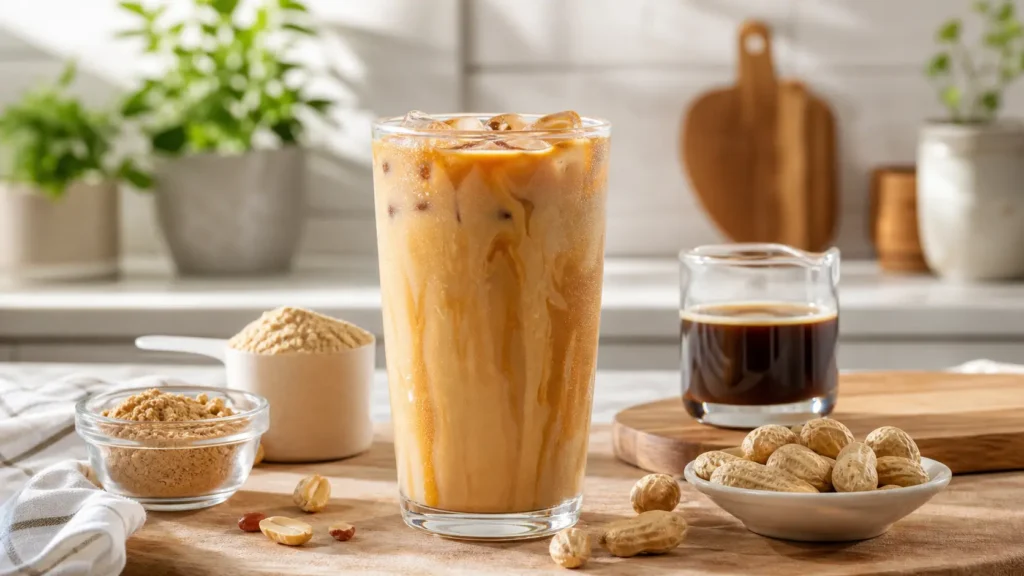
5. Peanut Butter Protein Coffee Recipe (Iced)
Protein source: Peanut butter powder + whey · Protein per serving: ~28 g · Best for: Dessert-style coffee that’s macro-friendly
Ingredients
- 1 cup iced coffee or cold brew
- 1 scoop vanilla protein
- 2 tbsp PB2 (powdered peanut butter)
- ½ cup milk
- Ice
Method
- Combine protein powder, PB2, and milk in a blender or shaker.
- Blend until smooth.
- Pour over ice and top with cold brew. Stir before drinking.
| Pro tip Add a frozen banana and blend instant peanut-butter protein smoothie territory. |
| Notes from my testing: PB2 dissolves better than real peanut butter and doesn’t leave an oily film on top of the drink. I tried both; real PB looked nicer for photos but tasted greasy. |
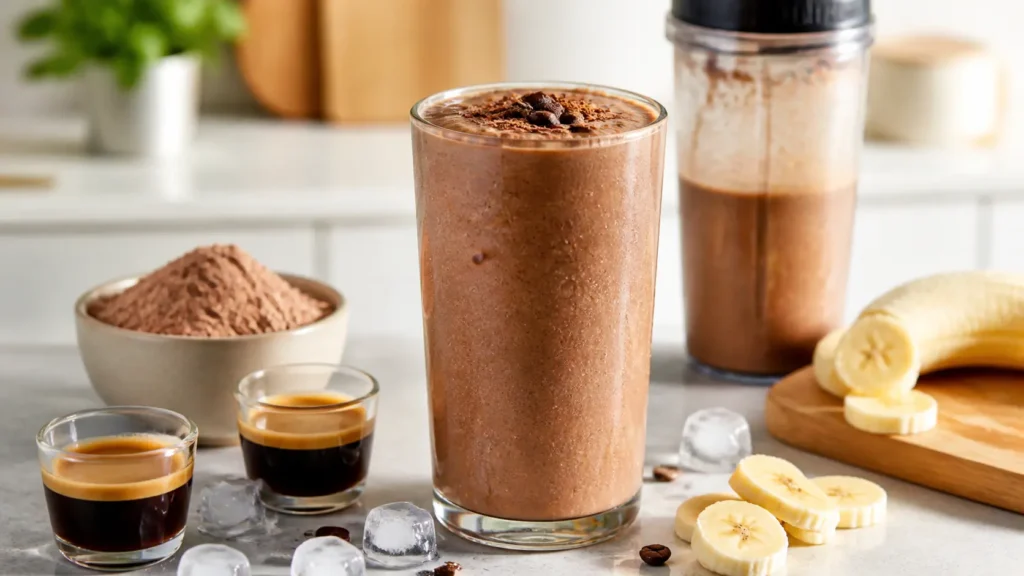
6. Espresso Protein Coffee Recipe (Pre-Workout Shake)
Protein source: Chocolate or mocha whey · Protein per serving: ~25 g · Best for: Pre-workout energy bomb / breakfast replacement
Ingredients
- 2 shots espresso, cooled
- 1 scoop chocolate or mocha protein
- 1 cup milk of choice
- ½ frozen banana
- 4–5 ice cubes
Method
- Add all ingredients to a blender.
- Blend on high until smooth and creamy.
- Drink immediately for the best texture.
| Pro tip Make it the night before, refrigerate, and shake before drinking saves time on busy mornings. |
| Notes from my testing: This is the only one I’d call a proper meal replacement. With banana, milk, and protein it lands around 380 kcal and 30 g protein. |
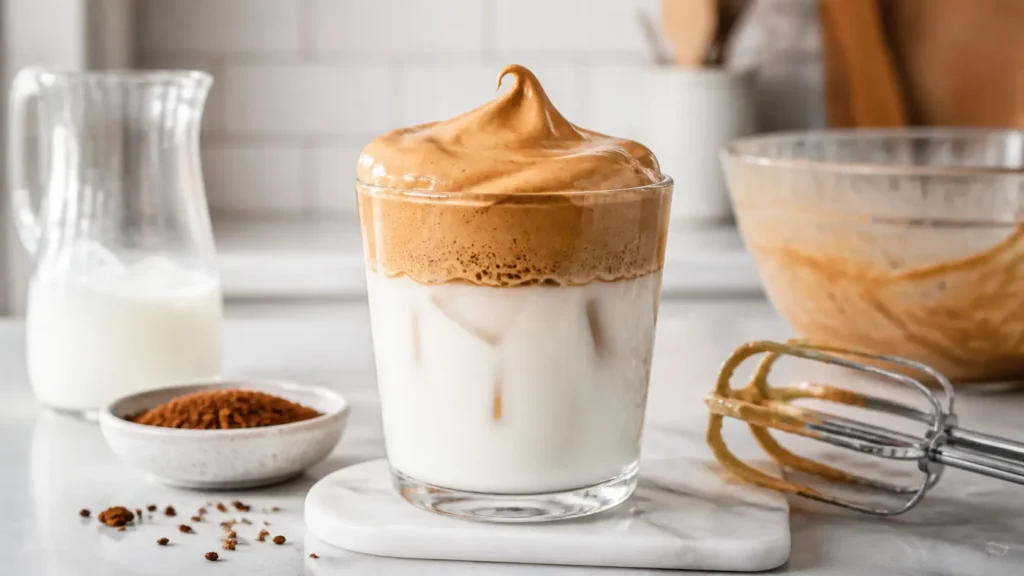
7. Dalgona Protein Coffee Recipe (Whipped, Café-Style)
Protein source: Vanilla casein · Protein per serving: ~22 g · Best for: When you want a café-style drink at home
Ingredients
- 2 tbsp instant coffee
- 2 tbsp hot water
- 2 tbsp sugar (or sweetener)
- 1 cup cold milk
- 1 scoop vanilla casein protein
Method
- Whip instant coffee, hot water, and sugar with a hand mixer for 3–5 minutes until stiff peaks form.
- In a separate glass, mix casein protein with cold milk and stir until smooth.
- Spoon the whipped coffee “cloud” on top.
- Swirl before drinking.
| Pro tip Casein works better than whey here, it’s thicker and makes the milk base creamier. |
| Notes from my testing: Don’t try this with cheap, large-granule instant coffee. Nescafé Gold or any small-granule instant whips up in half the time and gives stiffer peaks. |
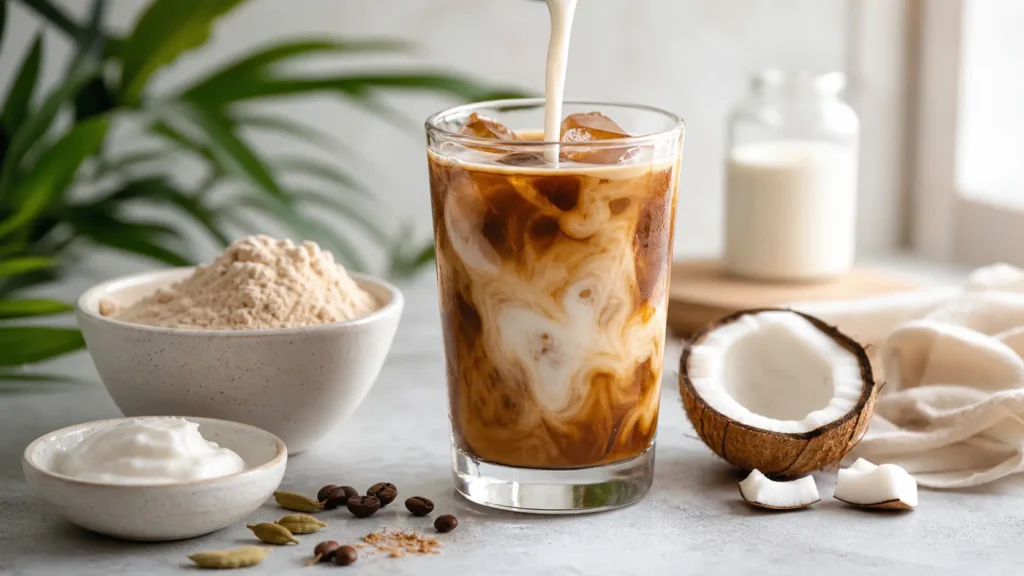
8. Dairy-Free Protein Coffee Recipe with Coconut Milk
Protein source: Plant-based (pea/brown rice) · Protein per serving: ~20 g · Best for: Dairy-free, vegan-friendly
Ingredients
- 1 cup brewed coffee, cooled
- 1 scoop vanilla plant-based protein
- ½ cup full-fat coconut milk (canned)
- Ice
- Pinch cardamom or nutmeg (optional)
Method
- Shake or blend protein powder with coconut milk until smooth.
- Fill a glass with ice and pour coffee over it.
- Add the protein-coconut milk mixture and stir.
- Sprinkle cardamom on top if using.
| Pro tip Full-fat canned coconut milk is significantly richer than the refrigerator-carton variety. Worth the swap. |
| Notes from my testing: Pea protein has a gritty mouthfeel even after blending. Brown rice + pea blends (like Vega) work better than pure pea. Always shake plant proteins for at least 45 seconds. |
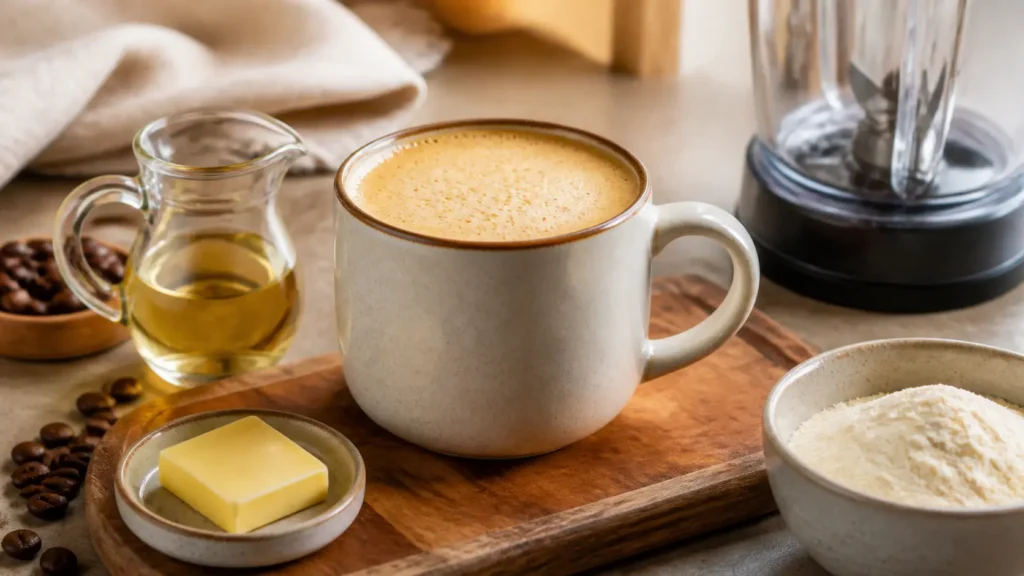
9. Keto Protein Coffee Recipe (Bulletproof-Style)
Protein source: Collagen peptides + MCT oil · Protein per serving: ~12 g · Best for: Keto / low-carb mornings
Ingredients
- 1 cup hot brewed coffee
- 1 tbsp unsalted grass-fed butter
- 1 tbsp MCT oil
- 1–2 scoops unflavored collagen peptides
Method
- Add coffee, butter, MCT oil, and collagen to a blender.
- Blend for 20–30 seconds until frothy and fully emulsified.
- Pour into a mug and drink hot.
| Pro tip Don’t skip the blender. Stirring won’t emulsify the fats and you’ll end up with a greasy layer on top. |
| Notes from my testing: Start with just ½ tbsp MCT oil if you’ve never had it too much triggers digestive issues for a lot of people, including me on my first attempt. |
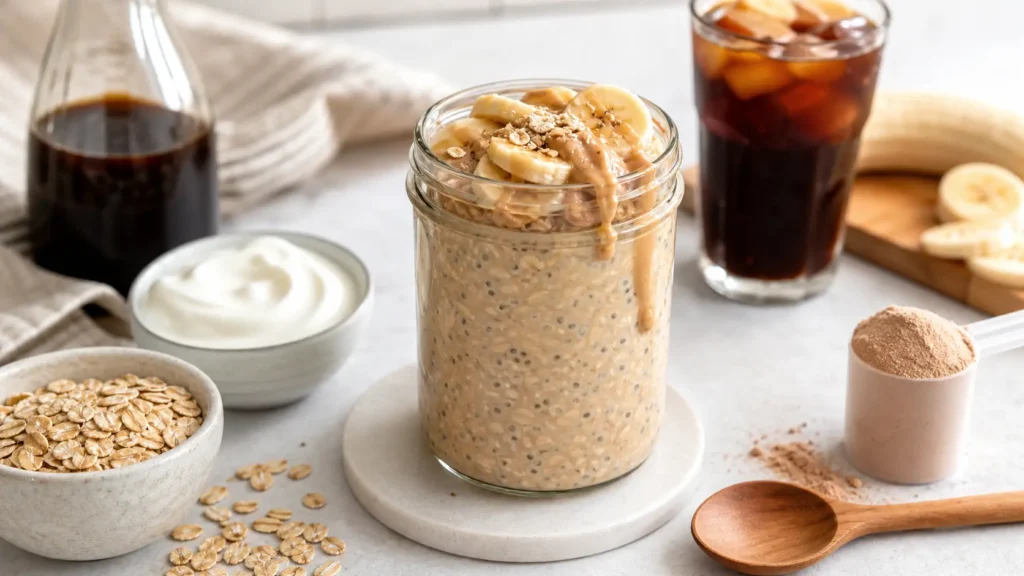
10. Overnight Protein Coffee Oats Recipe
Protein source: Greek yogurt + whey · Protein per serving: ~30+ g · Best for: Grab-and-go breakfast and coffee in one
Ingredients
- ½ cup cold brew coffee
- ¼ cup rolled oats
- ½ cup Greek yogurt
- 1 scoop vanilla protein
- ½ cup milk
- 1 tbsp chia seeds
- Sweetener to taste
Method
- The night before: combine everything in a jar and stir well.
- Cover and refrigerate overnight.
- In the morning, stir, add a splash more milk if too thick, and eat with a spoon or drink it down.
| Pro tip Top with sliced banana or a drizzle of almond butter for flavor and healthy fats. |
| Notes from my testing: After 8 hours in the fridge this becomes more pudding than drink. If you actually want to drink it, halve the oats and chia. |
Tips for Protein Coffee That Doesn’t Taste Chalky
- Use a shaker bottle or blender. Stirring with a spoon almost always leaves clumps.
- Match temperatures. Hot coffee changes the structure of whey but does not destroy its nutritional value. The issue is purely textural — clumping. Mix protein with room-temperature liquid first, then add hot coffee.
- Choose quality protein. A well-made whey isolate or pea/rice blend makes a far bigger difference than any technique. Cheap powders taste cheap.
- Start with half a scoop. If you’re new to protein coffee, work up chalk fatigue is real.
- Add flavor boosters. Cinnamon, vanilla extract, a pinch of sea salt, or a splash of sugar-free syrup transforms a basic recipe.
Protein Sources at a Glance
| Protein Source | Protein / serving | Best For | Texture in Coffee |
| Whey isolate | 20–25 g | Post-workout, fast absorption | Smooth — easiest to mix |
| Casein | 20–24 g | Creamier drinks, slower digestion | Thick, can gel in hot coffee |
| Collagen peptides | 10–12 g | Hair/skin/joint support, neutral flavor | Dissolves perfectly hot or cold |
| Greek yogurt | 15–20 g | Whole-food option | Thick, slight tang |
| Plant-based (pea/rice) | 18–22 g | Vegan, dairy-free | Can be gritty — blend longer |
| Peanut butter powder | 6–8 g | Flavor boost, dessert-style | Mixes cleanly |
Frequently Asked Questions
Can you put protein powder in hot coffee?
Yes, but mix it with a splash of room-temperature liquid first to make a paste, then add the hot coffee.
Heat won’t destroy whey’s nutritional value (denaturing just changes protein shape, not its amino acid content), but adding powder directly to boiling coffee causes clumping. Collagen is the exception it dissolves cleanly in hot liquid.
How much protein does a protein coffee actually have?
Most homemade versions land between 18 and 30 g, depending on your protein source and milk. One scoop of whey isolate (≈24 g) plus ½ cup of 2% milk (≈4 g) puts you at roughly 28 g close to the per-meal threshold for fully stimulating muscle protein synthesis in younger adults.
Does protein coffee break a fast?
Yes. Any protein, fat, or calorie-containing milk added to coffee breaks an intermittent fast. Plain black coffee with no additions is generally considered fasting-compliant. If you want to combine fasting with protein coffee, drink it at the start of your eating window.
Is protein coffee good before or after a workout?
Both work. Before a workout, the caffeine boosts performance (well-supported in the ISSN caffeine position stand) and the protein primes muscle protein synthesis. After a workout, the protein supports recovery. If you train hard most days, a single proffee within an hour of training is a reasonable strategy.
Will protein coffee help me lose weight?
It can help by increasing satiety and reducing mid-morning hunger, but it’s not a fat-loss drink by itself. Weight loss depends on overall calorie balance. If you swap a sugary coffee-shop drink for a homemade proffee, you’ll likely save calories. If you add it on top of your normal breakfast, you’ll add calories.
What’s the best protein powder for coffee?
Vanilla whey isolate is the most forgiving — clean flavor, smooth texture, easy to mix. For dairy-free, a blended pea/rice protein performs better than pure pea. Collagen is the best choice if you want zero flavor change to your coffee.
Who should not drink protein coffee?
Anyone advised to limit caffeine (pregnant or breastfeeding women, people with certain heart conditions, those sensitive to caffeine), children, and anyone with kidney disease who has been told to limit protein. Always check with a healthcare provider if you have a chronic condition.
| Editorial disclosure: This article contains affiliate links to products I have personally tested. Commissions don’t affect which products I recommend. Nutrition information is based on published research and manufacturer label data and is not medical advice. Consult a healthcare professional for personalized guidance. |