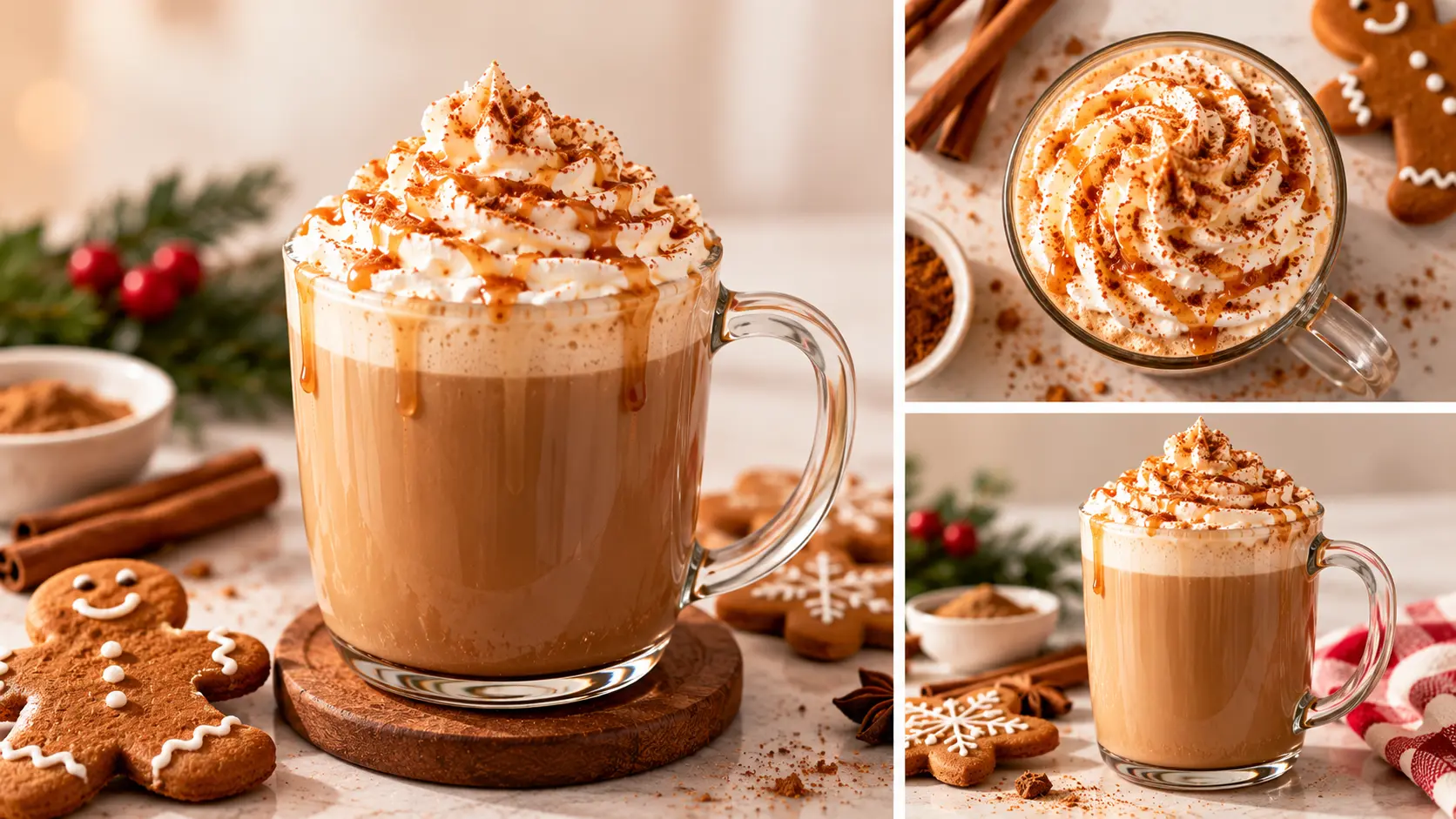
Gingerbread Latte Recipe (Better Than the Coffee Shop)

This gingerbread latte recipe starts with a 10 minute homemade syrup of dark molasses, ginger and warm spice. One small jar makes about six lattes.
Below you will find the recipe, which molasses to buy, how to fix a grainy syrup, and how to make it without an espresso machine.
At a glance
- Time: 10 minutes for the syrup, 5 minutes per latte
- Makes: about 3/4 cup syrup, enough for 6 lattes
- Caffeine: roughly 125 mg with two shots of espresso
- Difficulty: easy, no special equipment needed
- Keeps: syrup lasts about 2 weeks in the fridge
What Makes a Gingerbread Latte Taste Like Gingerbread
Gingerbread cookies get their flavor from three things working together: molasses for the deep, slightly bitter caramel taste, ginger for warmth, and a small amount of sweet spice like cinnamon, cloves and nutmeg. Most bottled gingerbread syrups lean hard on sugar and artificial flavor and skip the molasses, which is why they often taste flat.
When you make the syrup yourself, the molasses does most of the heavy lifting. It gives the latte that dark, toasty color and a flavor that stands up to strong coffee. The spices are there to round it out, not to overpower it. That balance is the whole goal of this recipe.
Choosing Your Molasses (This Matters More Than You Think)
Molasses is the leftover syrup from turning sugar cane into sugar. Each time the cane juice is boiled, more sugar is removed and the syrup left behind gets darker and stronger. The King Arthur Baking team explains the three main types well. Here is how they behave in a latte:
| Type | How it is labeled | Flavor | Use in this syrup? |
|---|---|---|---|
| Light molasses | light, fancy or mild | sweet, mellow, caramel | Yes, very gentle |
| Dark molasses | dark, robust or cooking | richer, a little bitter | Yes, best gingerbread flavor |
| Blackstrap | blackstrap | strong, bitter, mineral | Only a teaspoon, mixed with another type |
If you have spent time in a grocery store baking aisle, you know the labels can be confusing. In Canada you will often see fancy and cooking molasses side by side, while US stores tend to say light and dark. For this syrup, pick fancy, light or dark and look for the word unsulphured, which usually means a cleaner taste. Blackstrap on its own makes the latte taste harsh, so save it for baking or blend a small amount in if you like a bolder edge.
Ingredients and Why Each One Is There
For the gingerbread syrup
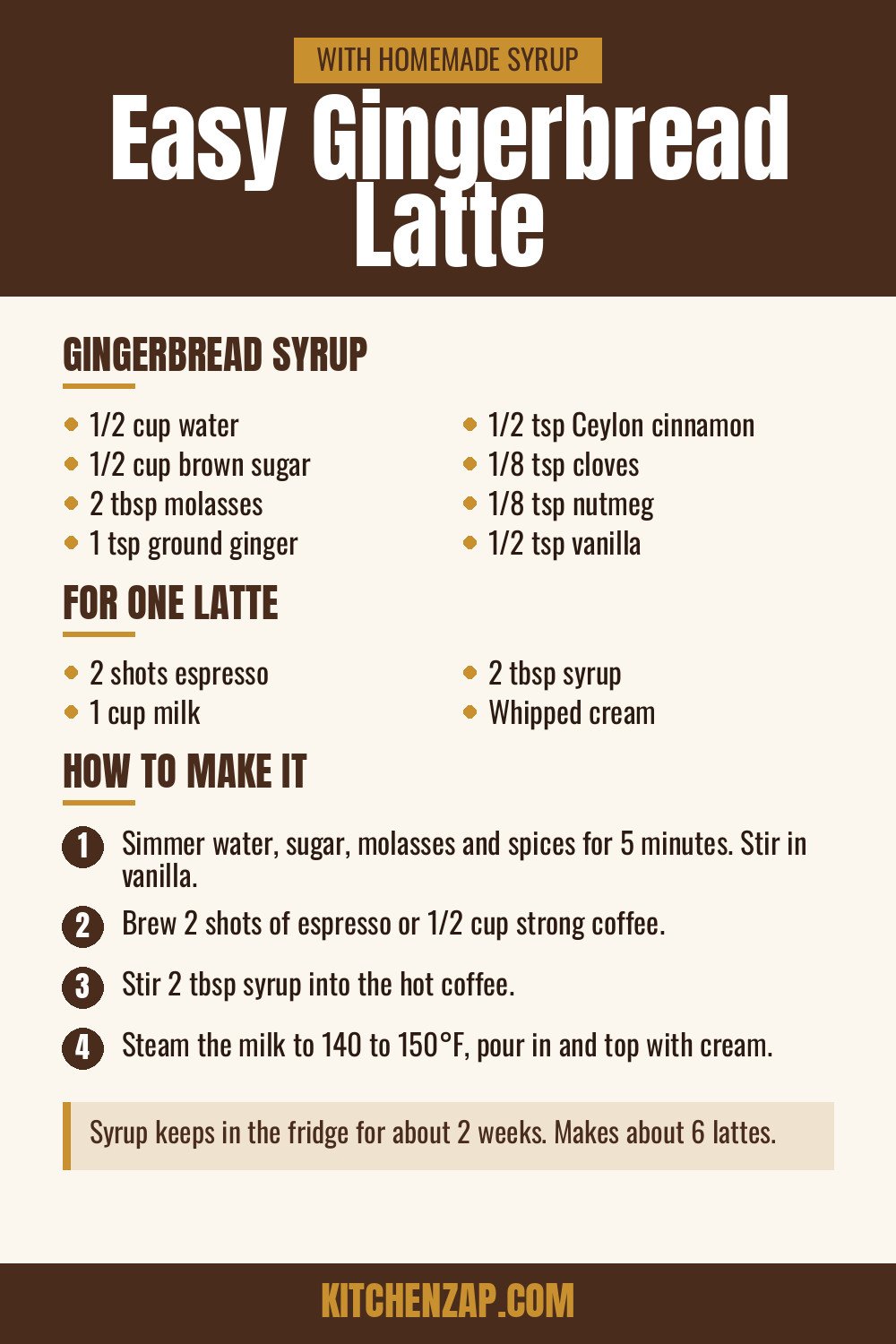
- 1/2 cup (120 ml) water. Dissolves the sugar and carries the spices.
- 1/2 cup (100 g) packed brown sugar. Dark brown sugar adds even more molasses flavor. Light brown works fine.
- 2 tablespoons unsulphured molasses. The backbone of the flavor. See the guide above.
- 1 teaspoon ground ginger. Ground ginger tastes warm and rounded. Fresh ginger is sharper and brighter.
- 1/2 teaspoon ground Ceylon cinnamon. Softer and sweeter than common cassia cinnamon.
- 1/8 teaspoon each of ground cloves and nutmeg. Tiny amounts on purpose. Cloves get loud fast.
- A pinch of salt and 1/2 teaspoon vanilla. Salt makes the spices taste brighter. Vanilla softens the edges.
A quick word on cinnamon. Cassia, the type most supermarkets sell as plain cinnamon, naturally contains more coumarin than Ceylon cinnamon. According to the NIH National Center for Complementary and Integrative Health, large amounts of coumarin can affect the liver in sensitive people. The amount in one latte is small, but if this becomes your daily drink all winter, Ceylon is the more comfortable choice.
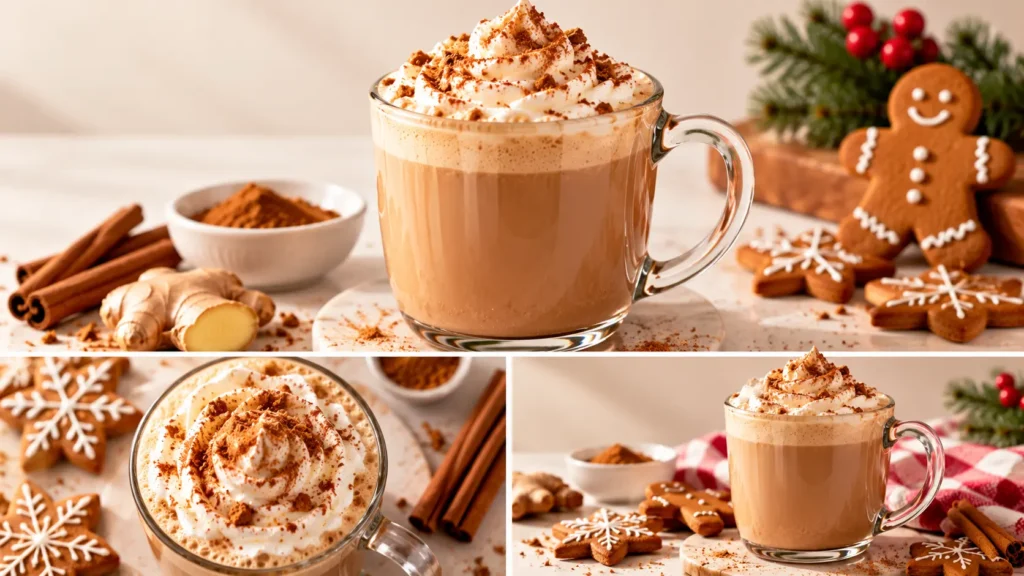
For one latte (about 12 ounces)
- 2 shots of espresso (about 60 ml), or 1/2 cup of very strong brewed coffee
- 1 cup (240 ml) milk. Whole milk gives the creamiest foam. Oat milk is the best dairy free swap.
- 1 1/2 to 2 tablespoons gingerbread syrup
- Optional: whipped cream and a pinch of cinnamon on top
How to Make the Gingerbread Syrup
Put the water, brown sugar and molasses in a small saucepan over medium heat. Stir until the sugar has fully dissolved and you can no longer feel grains on the bottom of the pan. This step is important. Undissolved sugar is the main reason homemade syrups turn grainy a few days later.
Whisk in the ginger, cinnamon, cloves, nutmeg and salt. Let the syrup bubble gently, not hard, for about five minutes. You will see it darken slightly and coat the back of a spoon. Take it off the heat and stir in the vanilla last, since vanilla loses some of its aroma when it boils.
The syrup will look thin while it is hot. That is normal. It thickens as it cools, so resist the urge to keep simmering it. Over reduced syrup turns sticky and can harden in the fridge. If you prefer a perfectly smooth syrup, pour it through a fine strainer or a coffee filter while it is still warm to catch the spice sediment.
How to Build the Latte
Brew the coffee strong. Milk and syrup soften coffee a lot, so a normal cup of drip coffee will taste weak here. Two espresso shots are ideal. Without a machine, use a moka pot, an AeroPress or a French press at about double your usual strength. Our guide to making strong French press coffee walks you through it, and the Coffee Ratio Calculator does the math for any cup size.
Stir the syrup into the hot coffee first. Syrup mixes easily into hot coffee and sinks to the bottom of cold milk, so this order keeps every sip even.
Heat and froth the milk. Warm it until it steams, around 140 to 150°F (60 to 65°C). Hotter than that and the milk starts to taste cooked and loses its natural sweetness. A steam wand, a handheld frother, or a jar with a tight lid shaken for 30 seconds all work. Not sure which texture you want? This guide to frothed vs steamed milk explains the difference.
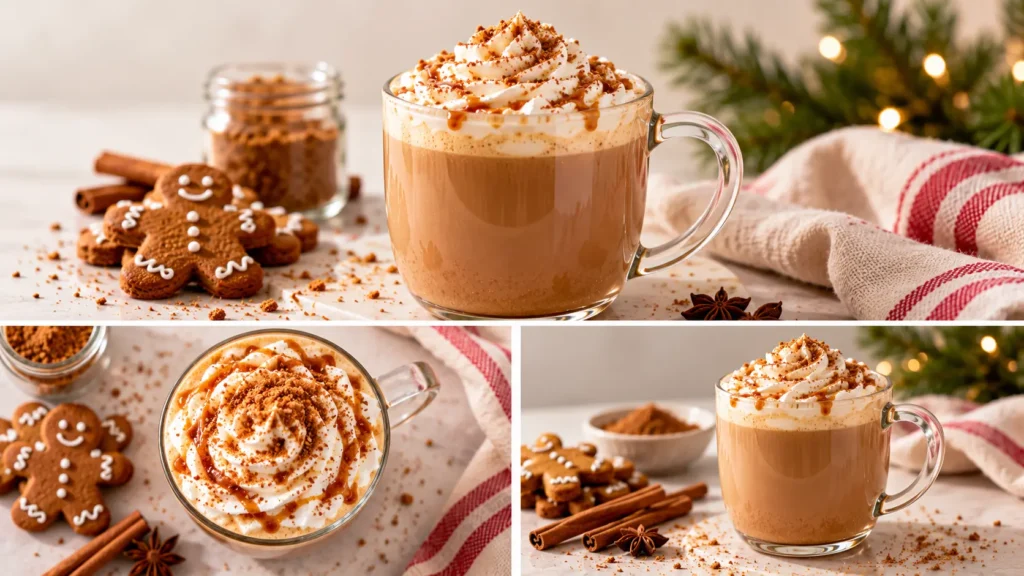
Pour and finish. Pour the milk in while holding back the foam with a spoon, then spoon the foam on top. Add whipped cream and a light dusting of cinnamon if you want it to look like the coffee shop version.
Troubleshooting: Fixes for the Most Common Problems
| Problem | Likely cause | Fix |
|---|---|---|
| Syrup turned grainy in the fridge | Sugar was not fully dissolved, or syrup boiled too hard | Warm it gently with 1 tablespoon of water and stir until smooth |
| Latte tastes too sweet | Too much syrup for the coffee strength | Use 1 tablespoon of syrup and a stronger coffee |
| Latte tastes bitter | Blackstrap molasses or very dark roast | Switch to light or dark molasses and a medium roast |
| Spices sit at the bottom of the mug | Ground spices settle out of the syrup | Shake the jar before using, or strain the syrup |
| Milk will not froth | Milk too hot, or low fat plant milk | Froth at 140°F, use whole milk or a barista oat milk |
Ways to Change It Up
Iced gingerbread latte. Stir the syrup into the espresso while it is still hot, let it cool for a minute, then pour it over ice and top with cold milk. Cold drinks taste less sweet, so you may want an extra teaspoon of syrup.
Lower sugar. Use 1 tablespoon of syrup and add a pinch of cinnamon on top. The spice tricks your brain into tasting more sweetness than is really there.
Gingerbread chai or tea latte. Swap the coffee for strong black tea. The syrup also works beautifully in hot chocolate, and a spoonful in a homemade peppermint mocha makes a gingerbread mint version.
Decaf for evenings. Decaf espresso keeps all the cozy flavor without keeping you awake.
Storing the Syrup and Giving It as a Gift
Pour the cooled syrup into a clean glass jar, close it tightly and keep it in the fridge. Use it within about two weeks and give it a shake before each use. If you ever see mold, cloudiness or smell anything off, throw it away and make a fresh batch.
A small jar of gingerbread syrup also makes a thoughtful holiday gift. Tie a ribbon around the lid and add a tag with the latte ratio: 2 tablespoons per cup of coffee and milk, keep refrigerated, use within 2 weeks. For more syrup ideas, try these 5 homemade coffee syrups or our guide to making coffee syrups at home.
How Much Caffeine Is in a Gingerbread Latte?
According to the Mayo Clinic caffeine guide, one shot of espresso has about 63 mg of caffeine, so a double shot latte lands somewhere around 125 mg. That is a little more than an average 8 ounce cup of brewed coffee. Most healthy adults can enjoy that without trouble, but if you are sensitive to caffeine, pregnant or taking medication, a single shot or decaf is a good idea. You can check your own cup with the Coffee Caffeine Calculator.
More Holiday Coffee to Try
If you are hosting this season, a pot of holiday spiced percolator coffee serves a whole table, and our 20 café style French press coffee recipes will keep you busy until spring. Save this recipe to your Christmas & Holiday Drinks board on Pinterest so the syrup ratio is always one tap away.
Gingerbread Latte
Ingredients
Method
- Add the water, brown sugar and molasses to a small saucepan over medium heat and whisk until the sugar dissolves.
- Stir in the ginger, cinnamon, cloves, nutmeg and salt. Simmer gently for 5 minutes, stirring occasionally.
- Remove from the heat, stir in the vanilla and let cool. Strain through a fine strainer if you want a smooth syrup.
- Brew 2 shots of espresso or 1/2 cup of very strong coffee into a mug.
- Stir in 2 tablespoons of gingerbread syrup.
- Heat the milk to about 140 to 150°F (60 to 65°C) and froth it.
- Pour the milk into the coffee, spoon the foam on top and finish with whipped cream and a pinch of cinnamon if you like.
Notes
Frequently Asked Questions
What does a gingerbread latte taste like?
It tastes like a warm gingerbread cookie in coffee form: deep caramel from the molasses, gentle heat from the ginger and a soft cinnamon finish, all rounded out by creamy milk. With about 2 tablespoons of syrup it is sweet, but not candy sweet.
Can I make a gingerbread latte without an espresso machine?
Yes. Use 1/2 cup of very strong coffee from a moka pot, AeroPress, French press or percolator. Brew it about twice as strong as usual so the coffee still comes through the milk and syrup.
Can I use fresh ginger instead of ground ginger?
You can. Simmer about 1 tablespoon of thinly sliced fresh ginger in the syrup, then strain it out. Fresh ginger tastes brighter and spicier, ground ginger tastes warmer and rounder.
Why did my gingerbread syrup crystallize?
Usually the sugar was not fully dissolved before the syrup came to a simmer, or it boiled too hard. Warm it gently with a spoonful of water and stir until smooth.
How long does homemade gingerbread syrup last?
Kept in a clean, sealed jar in the fridge, use it within about 2 weeks. Shake it before each use because the spices settle.
Is gingerbread syrup good in other drinks?
Very. Try it in black tea, cold brew, hot chocolate or a peppermint mocha. It also works drizzled over oatmeal or pancakes.
How this post was made: the recipe was developed with help from AI writing tools and checked and edited by Yousuf before publishing. Read our Editorial Policy. Photo credits: some photos by Ioana Motoc, Nati, Karolina Grabowska and yasminizm on Pexels; photos show similar drinks and may differ slightly from this recipe.